Concealed Carry in New Mexico
Concealed Carry in New Mexico: Choosing the Right Holster for Everyday Carry
By Roy McClellan
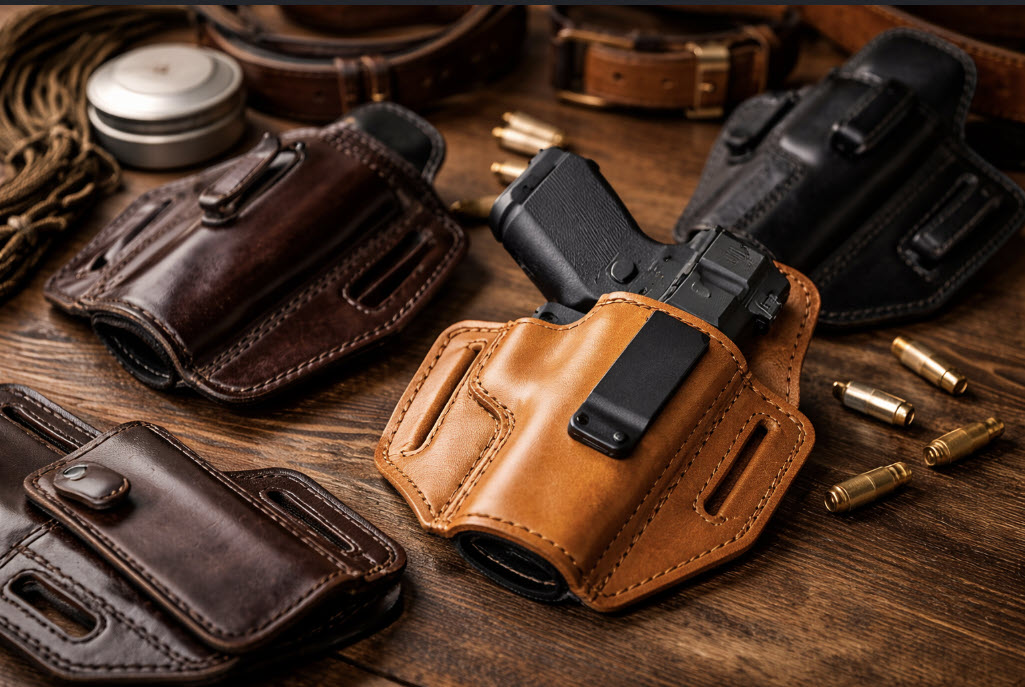
You passed your NM CHL course, cleared the background check, and received your license. Now comes the question every new carrier faces: how do you actually carry every day - comfortably, safely, and in a way that works for your lifestyle? The answer starts with your holster.
Key Takeaways
- Your holster must fully cover the trigger guard at all times - a non-negotiable safety requirement.
- Inside-the-waistband (IWB) holsters offer the best concealment for most body types and carry positions.
- Retention must be tested before you carry in public.
- Comfort and consistency go hand in hand - if your holster is uncomfortable, you will stop carrying.
- Dry-fire practice with your actual carry holster is essential.
The One Rule That Cannot Be Compromised
Every holster must fully cover and protect the trigger guard. A holster that leaves the trigger exposed is a liability and is how negligent discharges happen during holstering.
IWB vs. OWB
- IWB holsters sit between your body and waistband - superior concealment, preferred for warmer months; requires pants with 1–2 inches of extra waist room.
- OWB holsters attach outside your belt - more comfortable for extended wear, faster draw; requires a cover garment for concealment.
Carry Position
- Strong-side hip (3 o'clock): most natural draw position.
- Appendix (AIWB, ~1 o'clock): excellent concealment and fast draw; requires careful re-holstering and a purpose-built holster.
- Small of back (6 o'clock): good concealment but not recommended - hard to access seated, spinal injury risk in a fall.
- Shoulder holster: useful for long hours seated/driving; requires a cover garment and careful muzzle discipline.
Holster Materials
- Kydex: rigid thermoplastic, consistent retention, easy one-handed re-holster, unaffected by moisture. Most popular among trained carriers.
- Leather: comfortable, breaks in over time; can absorb moisture and collapse when drawn.
- Hybrid: Kydex shell + leather/foam backing; retention of Kydex with improved comfort.
Training Application
- Wear your holster empty for several days before carrying live.
- Practice your draw stroke with an unloaded firearm - 10–15 slow reps per session.
- Practice re-holstering slowly; look the firearm into the holster, keep your trigger finger indexed.
- Bring your carry setup to a structured training course for evaluation.